
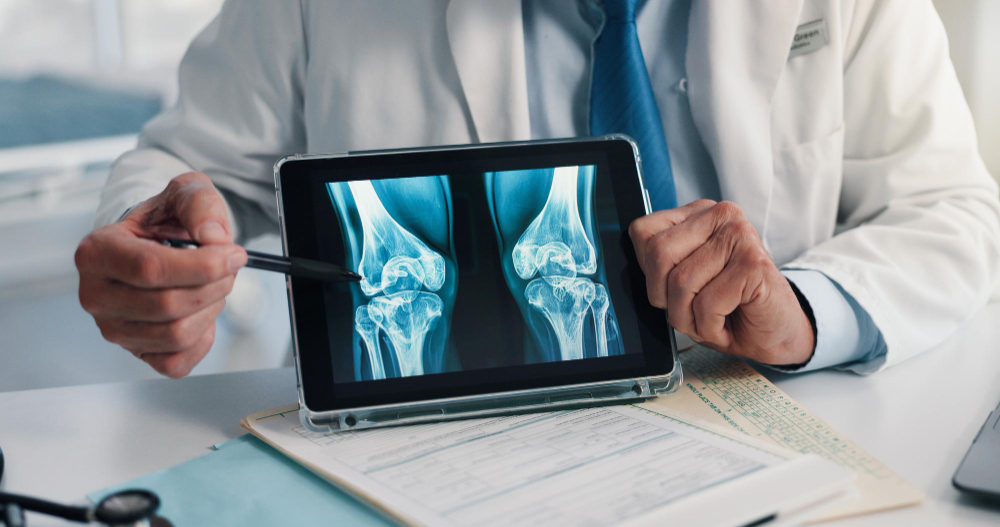
An MRI knee scan is a safe and detailed way to look inside your knee. Doctors use it to check for problems with ligaments, cartilage, and joints. Because it uses strong magnets and radio waves, it shows clear images of soft tissues. This helps doctors find the cause of knee pain or injury. If you have ongoing knee issues, an MRI knee scan can give important answers.
An MRI, or Magnetic Resonance Imaging, is a test that creates detailed pictures of your knee. Unlike X-rays, it does not use radiation. Instead, it uses magnets and radio waves. As a result, it can show soft tissues like ligaments and cartilage very clearly. Doctors often use MRI scans to check for injuries or diseases inside the knee.
Doctors may suggest an MRI knee scan for several reasons. For example, if you have knee pain that does not improve, an MRI can help. Sometimes, swelling, stiffness, or trouble moving your knee leads to this test. In addition, if you have had an injury, like a sports accident, an MRI can show the extent of the damage. Here are some common reasons for an MRI knee scan:
MRI scans are very good at showing soft tissues. Because of this, they can spot ligament injuries, cartilage damage, and joint problems. For instance, a knee MRI for ligament injury can reveal tears or strains. Similarly, a cartilage damage MRI scan can show worn or torn cartilage. The scan also helps doctors see if there is fluid, swelling, or other joint issues. This makes MRI a key tool for joint pain diagnosis with MRI.
Many people get an MRI knee scan after noticing certain symptoms. For example, you might have:
If these symptoms last or get worse, your doctor may recommend an MRI scan.
Before the scan, you may need to remove metal objects like jewelry. During the MRI, you will lie on a table that slides into a large tube. The scan is painless, but you must stay still. While the machine makes loud noises, you can usually wear earplugs. Most knee MRI scans take about 30 to 45 minutes. After the scan, you can return to normal activities right away.
After the scan, a radiologist reviews the images. Then, your doctor will explain the results to you. They will discuss any ligament tears, cartilage damage, or joint problems found. Sometimes, the MRI shows normal results, which can help rule out certain issues. If a problem is found, your doctor will talk about treatment options. This may include rest, physical therapy, or surgery, depending on the cause.
MRI knee scans offer many benefits. For instance, they provide clear images of soft tissues. They help diagnose injuries that X-rays might miss. Also, MRI scans do not use harmful radiation. However, there are some limitations. For example, metal implants can affect image quality. Sometimes, small injuries may not show up clearly. In rare cases, people may feel anxious in the MRI machine. Still, for most knee problems, MRI is a safe and helpful tool.
Taking care of your knees can help prevent injuries. For example, you can:
If you notice knee pain, rest and seek medical advice early. Early care can prevent bigger problems later.
MRI knee scans are a valuable tool for finding ligament, cartilage, and joint problems. They help doctors make the right diagnosis and plan treatment. If you have knee pain or injury, consult at SIGMA MRI & DIAGNOSTIC CENTRE for personalized advice on knee pain or MRI scans.